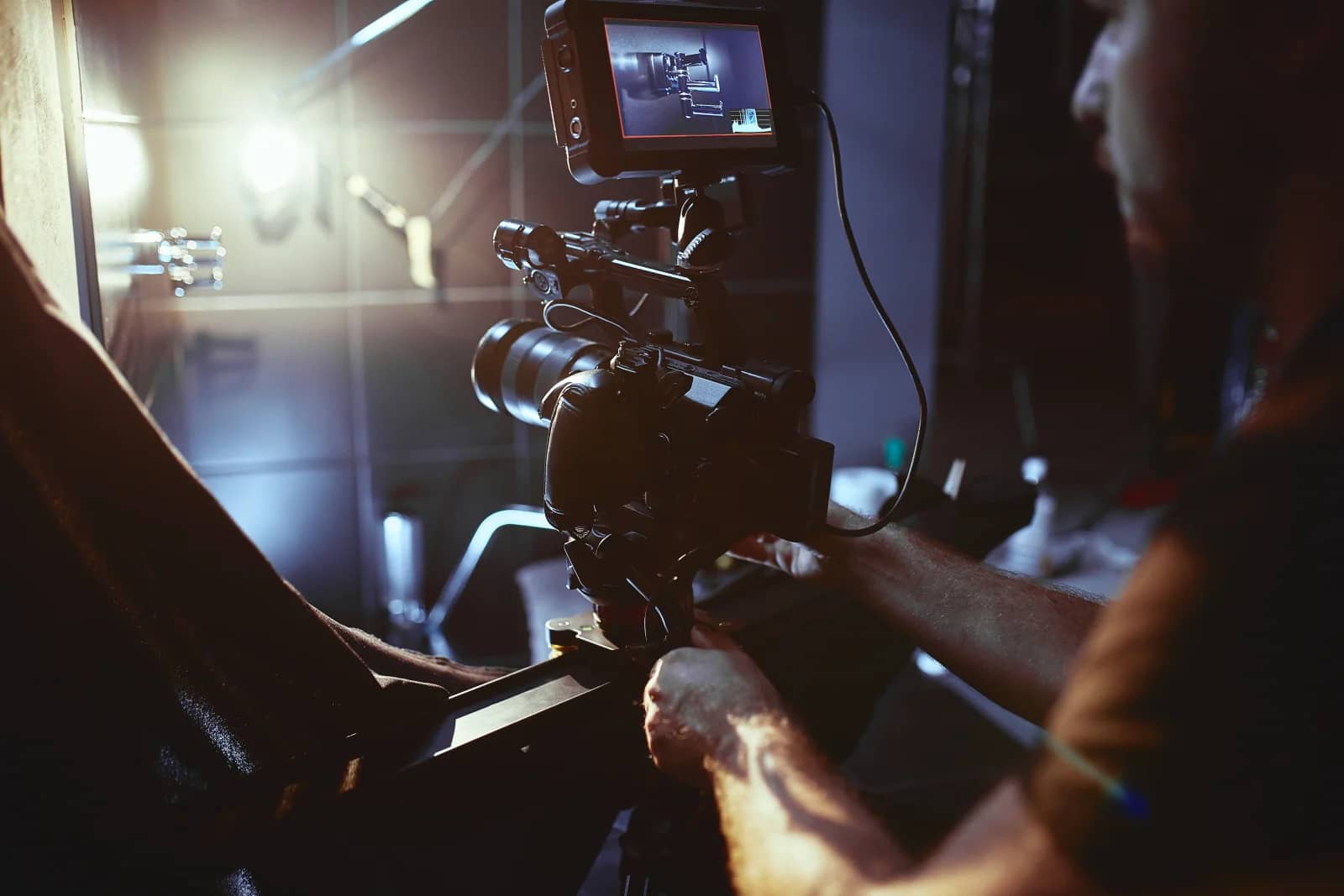

Most firms do not have a vertical video for law firms problem because they skipped vertical. They have it because they faked it. They took one horizontal interview, dropped it into a 9:16 canvas, filled the top and bottom with black, and posted it to Instagram and LinkedIn as if nobody would notice.
Everybody noticed. The viewer scrolling Reels on a phone sees a thin strip of partner floating in a black void, and they read it in under a second: this was made for somewhere else, and I am an afterthought.
That read does not stay on the video. It transfers to the firm. A lawyer who does not understand the platform looks like a lawyer who will not understand the client. Reformatting is not a distribution strategy. It is an announcement.
Black Bars Are a Message, Not a Format
Every platform teaches its audience what belongs there. Reels, Stories, TikTok and Shorts fill the phone edge to edge. The LinkedIn feed rewards tall 4:5 frames that take up more of the scroll. When your video arrives letterboxed, it breaks a visual pattern the audience has already seen a thousand times that day.
Breaking a pattern usually earns attention. This break earns the wrong kind. It reads as a repost, a leftover, the Friday afternoon task nobody wanted. The content could be the sharpest explanation of comparative negligence ever filmed, and the frame will still tell the viewer it was not made for them.
Legal clients are already primed to feel processed. They expect to be a file number. A letterboxed video confirms that expectation before the attorney says a word.
There is a practical cost too. A 16:9 frame inside a 9:16 canvas uses roughly a third of the screen. Your partner's face shrinks to the size of a postage stamp, the captions become unreadable, and the platform's own buttons sit on top of empty black where nothing is happening. You paid for a full screen and rented a third of it.
Vertical Video for Law Firms Is Decided on Set, Not in the Edit
The instinct is to fix aspect ratio in post. Shoot wide, crop later. That instinct is where most of the damage happens.
A standard interview is composed for a horizontal frame. The subject sits on a third, the look room opens toward the interviewer, and a bookshelf or window fills the other side. Crop that to vertical and you get half a face, a sliver of shelf, and a subject looking out of frame at nobody.
The decisions that make vertical work are camera decisions:
- Where the subject sits in the frame, so a vertical extraction keeps the eyes, hands and shoulders.
- How much headroom exists, because a 9:16 frame needs vertical space a 16:9 frame throws away.
- What is behind the attorney, since a tall frame shows more wall, ceiling and floor than anyone planned for.
- Where the lav cable, the light stand and the sandbag sit, because vertical reveals what horizontal hid.
- Where the eyeline lands, so the attorney reads as talking to the viewer and not to someone off the edge of the phone.
None of this can be rescued by an editor. If the camera did not capture it, it does not exist in the file.
Every Platform Speaks Its Own Grammar
Aspect ratio is only the first word. Each platform has a native grammar, and the audience notices when you speak it with an accent.
- Instagram Reels and Stories: full 9:16, a hook in the opening second, and text kept out of the bottom band where captions and buttons live.
- TikTok and YouTube Shorts: 9:16, faster cuts, and a direct-to-camera register that feels like a conversation instead of a broadcast.
- LinkedIn feed: 4:5 or 1:1 holds the scroll, silent autoplay is the default, and the first frame has to state the point in text.
- YouTube long-form and your website: 16:9, where the full interview, the B-roll and the considered pacing belong.
A firm that treats these as one video in four sizes loses on all four. A firm that treats them as four edits drawn from one well-planned shoot wins on all four, and still pays for one production day.
This is the same failure described in the piece arguing that your ad is not underperforming, your creative is boring. Media budgets get blamed for results that were decided in the edit bay. A letterboxed clip is not a targeting problem. It is a creative problem wearing a targeting problem's clothes.
Center-Cropping Is Not the Fix Either
Some firms have learned that bars look bad, so they swap them for an automatic center crop. The result is a different failure.
Auto-reframe tools track a face, and faces are only part of the story. Hands gesturing at a document get cut off. The graphic carrying the phone number falls outside the crop. A two-person conversation becomes a single head answering a voice from nowhere.
Then there are safe zones. On Reels, TikTok and Shorts, the bottom of the screen is covered by captions, usernames and buttons, and the right edge carries the like, comment and share stack. A center crop does not know that. Your burned-in subtitles land underneath the interface and your call to action disappears behind a heart icon.
Vertical has to be designed, not derived. That means a frame composed with the interface in mind, text placed in the upper-middle band, and graphics built at native resolution for each ratio.
Shoot Once, Frame Three Times
The answer is not three shoots. It is one shoot planned for three outputs from the first call sheet. This is the production discipline behind turning a single day into a month of assets, and it is exactly where most volume promises fall apart.
The mechanism is straightforward:
- Shoot at a resolution high enough to extract a clean 1080 by 1920 vertical from the horizontal master. 4K at minimum, higher for tighter crops.
- Compose the master with a protected vertical center. Mark it on the monitor. The attorney stays inside it for every take.
- Run a second camera mounted vertically for the lines you already know will open a Reel. Your strongest answers deserve a native frame, not an extraction.
- Dress the set for height. Put something intentional above the subject's head and below their hands, because the vertical frame will show both.
- Light for the tall frame. A soft key that falls off above the shoulders looks elegant at 16:9 and dim at 9:16.
- Script the hooks separately. Record short, direct-to-camera openers written for the scroll, not lifted from the middle of a long answer.
A firm running one shoot a quarter under this plan ends up with a long-form interview for the website, a set of vertical cuts for Reels and Shorts, 4:5 cuts for LinkedIn, and stills for everything else. The same firm running the same shoot without the plan ends up with one good horizontal video and a folder of letterboxed afterthoughts.
One shoot planned for three frames beats three frames forced out of one shoot. The difference is decided before anyone turns on a light.
The Vertical Edit Is a Different Edit
Even when the footage is right, many teams resize the timeline and call it done. A vertical edit is not a smaller horizontal edit. It is a different piece of work.
Horizontal long-form can open on an establishing shot, let the attorney settle into an answer, and build. Vertical cannot. The scroll decides in the first second whether to stop, so the vertical cut leads with the claim: the mistake, the deadline, the question the viewer is already asking.
Pacing changes. Cuts come faster, pauses get trimmed, and B-roll gets reframed or replaced, because a wide shot of a courthouse becomes a gray smear at phone width. Captions are burned in, sized for a phone held at arm's length, and placed inside the safe band.
Length changes too. The two-minute answer becomes a thirty to forty-five second cut that makes one point and stops. The full answer lives on the website, where the viewer who wants depth will go looking for it.
This is also where compliance lives. The disclaimers your state bar requires still need to be legible at 9:16. Design them for the vertical frame instead of shrinking the horizontal version until it is technically present and practically invisible.
Vertical Video for Law Firms Is a Trust Signal
Here is the part firms underrate. Native vertical is not a nicety. It is evidence.
A prospective client comparing three personal injury firms at eleven at night is not reading bar credentials. They are reading signals. A firm whose video fills the screen, speaks straight to camera and makes one clear point looks like a firm that knows where its clients actually are. A firm posting letterboxed clips looks like a firm talking at people from a conference room.
The same logic holds on LinkedIn, where the audience is referral partners, in-house counsel and other attorneys. They know what a native post looks like. A reformatted clip tells them the firm handed its presence to a resize button.
Production crews understand this instinctively because they live with the consequences of every framing call. The Meet the Team Behind the Productions post makes the case that the right people matter more than the biggest team, and this is exactly where that shows up: a camera operator who frames for three outputs without being asked, and an editor who rebuilds instead of resizing.
What Changes on Monday
Start with an audit. Pull the last ten videos your firm posted to Instagram and LinkedIn. Count the black bars, the cropped-off graphics, and the captions sitting under a platform button. That count is your baseline.
Then change the brief. Before the next shoot, the production plan names every output: which platforms, which ratios, which hooks, which lengths. If the call sheet only describes a horizontal interview, the vertical assets will be afterthoughts no matter how talented the editor is.
- Retire every letterboxed video that is still pinned or boosted.
- Require a protected vertical center on every interview setup.
- Write platform hooks as their own script, recorded direct to camera.
- Approve vertical and horizontal edits as separate deliverables, not one file in two sizes.
- Check every caption and disclaimer against the safe zone before anything publishes.
The firms that win on social do not shoot more. They shoot with intent. Stop sending one video everywhere and hoping the audience will forgive the frame. They will not. Build the frame for the place they are standing, and they will stay long enough to hear why you are the right call.