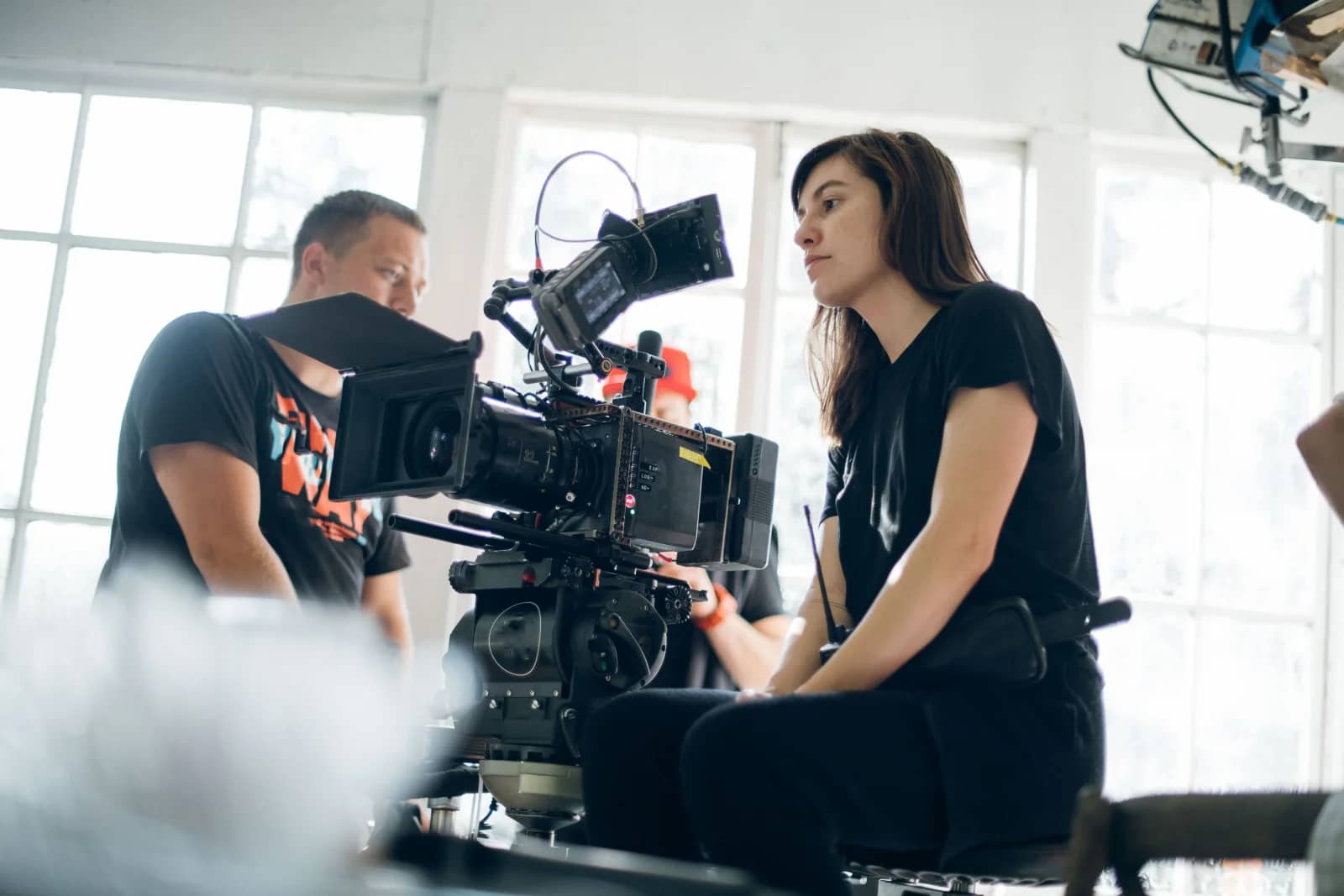

Walk into most local businesses and you will find the same scene: a bright, high-traffic space full of product, light, and people, being used to store chairs and hold a register. The owner is paying rent on a working film set every single month and shooting nothing in it.
The mistake nearly everyone makes with content marketing for a local retail business is treating content as something you leave the building to go make. You book a photographer. You rent a location. You script a day. Meanwhile the best set you will ever have access to is unlocked eight hours a day with your actual customers already standing in it.
Your physical location is a content studio. You are using it to store chairs.
The Most Expensive Studio You Own Is Sitting Idle
A kava bar, a furniture showroom, a boutique, a salon, a tasting room. These are not backdrops for content. They are the content. The space already has the three things a production team spends real money to build: environment, motion, and product in use. You do not have to fabricate a mood when the room already has one.
Think about what you are actually renting. Square footage, yes. But also a lighting setup that changes beautifully across the day, a rotating cast of real people, and a constant supply of moments that no studio can stage because they are not staged. A first-time customer's reaction. A regular's ritual. The thing your staff does with their hands that nobody outside the building has ever seen.
Do an inventory this week. Walk your own floor with your phone and count the shots that exist naturally in a normal hour of business: the pour, the unboxing, the fitting, the demo, the line at open, the quiet reset before close. You will stop counting before you run out. That inventory is a month of content sitting in plain sight, and right now it is walking out the door unfilmed.
Content Marketing for a Local Retail Business Begins Where Customers Already Stand
National brands buy attention. They pay to interrupt strangers who have no relationship to the product and no reason to care yet. That is an expensive way to earn a first impression, and it is the game most local businesses lose when they try to copy it.
You have the opposite asset and you keep ignoring it. The people inside your location already chose you. They drove there. They walked in. They are, at this moment, the warmest audience you will ever address, and they are physically present with you. Content marketing for a local retail business works because the audience is not something you rent from a platform. It is something you seat, serve, and photograph.
The mechanism is simple and almost nobody runs it: capture the room, then publish the room back to the room. Film the Saturday crowd and post it Sunday. The regulars see themselves. The people who almost came in see what they missed. You are not manufacturing social proof in an editing bay. You are documenting proof that produced itself and putting it where the next customer will find it before they arrive.
That is why proximity beats budget locally. A retailer with one camera and a real room will out-content a competitor with a bigger ad budget and no location footage, because one of them is showing a place people can actually walk into and the other is showing stock imagery that could be anywhere.
Your Customers Are the Cast, Not the Crowd
Stop thinking of the people in your space as an audience to reach later. They are the cast right now. The most persuasive content a local business can publish is a real customer using the product in the real space, and that footage costs you nothing but the discipline to ask and the phone in your pocket.
There is a reason this lands harder than a polished spot. People do not trust businesses; they trust other people who look like them, in a place that looks real, doing the thing they are considering doing. A staged testimonial reads as staged. A regular talking with a drink already in their hand reads as true, because it is.
The piece on this blog about the team behind the productions makes a point that applies directly here: the work gets its weight from the people, not the polish. Your content works the same way. Put the humans on camera, in the room, doing the actual thing, and the production value takes care of itself.
Here is a repeatable way to source it without turning your floor into a set:
- Ask one happy customer per shift a single question on camera. Not a script. One question, thirty seconds, phone held steady.
- Film the product in use before you film anyone talking. The action shot carries the reel; the words are the caption.
- Get a plain verbal yes to post, and keep a shot list of the five interactions that repeat every day so your team knows what to grab without thinking.
- Treat staff as recurring cast. The same friendly face across a month of clips builds familiarity that a rotating stream of strangers never will.
The Room Already Solved the Problem Your Ads Keep Losing
There is a post on this blog arguing that your ad is not underperforming, your creative is boring. Location content is the cure, and most businesses are sitting on the antidote without knowing it. Boring creative is almost always creative that was made in a vacuum: a flat product photo, a generic headline, a template that a thousand other brands are running this week.
A real space cannot be boring in the same way, because it contains specifics no template can invent. The condensation on the glass. The light through your front window at four in the afternoon. The particular way your busiest employee greets a regular by name. Specificity is what stops a thumb, and your location generates specificity for free every hour it is open.
A stock photo says a product exists. A shot of your room says a place exists, and a place is something a person can decide to walk into.
So when a campaign underperforms, do not immediately raise the budget. Change the source of the footage. Pull the creative from the floor instead of the folder of assets everyone else is using. The lift you are chasing usually is not hiding in the targeting. It is hiding in the room you stopped filming.
Shoot Once, Publish for a Month
The reason owners believe they cannot keep up with content is that they picture a separate shoot for every post. That is the wrong model and it is the reason the camera stays in the drawer. The right model is batching: concentrate the capture, then spread the publishing.
One focused hour of filming across a normal business day produces enough raw material to feed weeks of posts, because a single space shot from a few angles yields dozens of usable moments. You are not making thirty pieces of content. You are capturing one rich hour and cutting it thirty ways.
A retailer running one deliberate capture session a week ends up with a library, not a scramble. Here is the general shape of that library from a single session:
- Short vertical clips of the product in motion, one per angle, for daily social.
- A handful of customer moments for proof-driven posts and paid creative.
- Still frames pulled straight from the video for the website, email, and listings.
- Ambient b-roll of the space that becomes the backdrop for every announcement you make for the next quarter.
The discipline that makes this work is separating the two jobs. Capture is a physical act you do on the floor. Publishing is a scheduling act you do at a desk. Confuse them and you will feel behind forever. Split them and one hour of filming quietly covers a month of feed.
Content Marketing for a Local Retail Business Is Won on Distribution
Filming the room is half the job. The other half is putting that footage everywhere a local decision gets made, and this is where most businesses leave the value on the table. Great footage that lives only on one social profile is a studio that opens for one customer a day.
Distribution for a local business is not about chasing a national audience. It is about saturating the small radius that actually buys from you. The same clip should work harder across every surface a nearby customer touches before they decide.
- Your map listing, where a short video of the real interior outperforms ten stock photos and answers the only question a local searcher has: what is it actually like in there.
- Short-form vertical feeds, where location footage reads as native because it is native.
- Email to the people who already visited, showing them the room they liked so they come back sooner.
- Your own website, where a customer close to buying wants to see the space one more time before they drive over.
One capture session, cut for each of those surfaces, means a single hour of filming shows up in every place your neighbor looks. That is the compounding advantage. The competitor with the bigger ad budget is renting attention on one platform. You are earning it on all of them with footage the room hands you for free.
Put a Camera Where the Chairs Are
On Monday, walk your floor at the busiest hour with your phone and film for ten minutes. Do not script it. Do not clean up first. Capture the room exactly as your customers experience it, and note the three moments that repeat because those are your recurring shots for the next year.
Then block one hour on the calendar every week and label it capture, not marketing. Marketing is what you do at the desk with the footage. Capture is what you do on the floor, and it is the part every busy owner skips, which is exactly why the businesses that do it pull ahead.
You are already paying for the studio. You are already staffing it, lighting it, and filling it with the warmest audience you will ever have. The only thing missing is the decision to point a camera at what is already happening. Do that this week, and the space stops being a place that stores chairs and starts being the most productive piece of media your business owns.